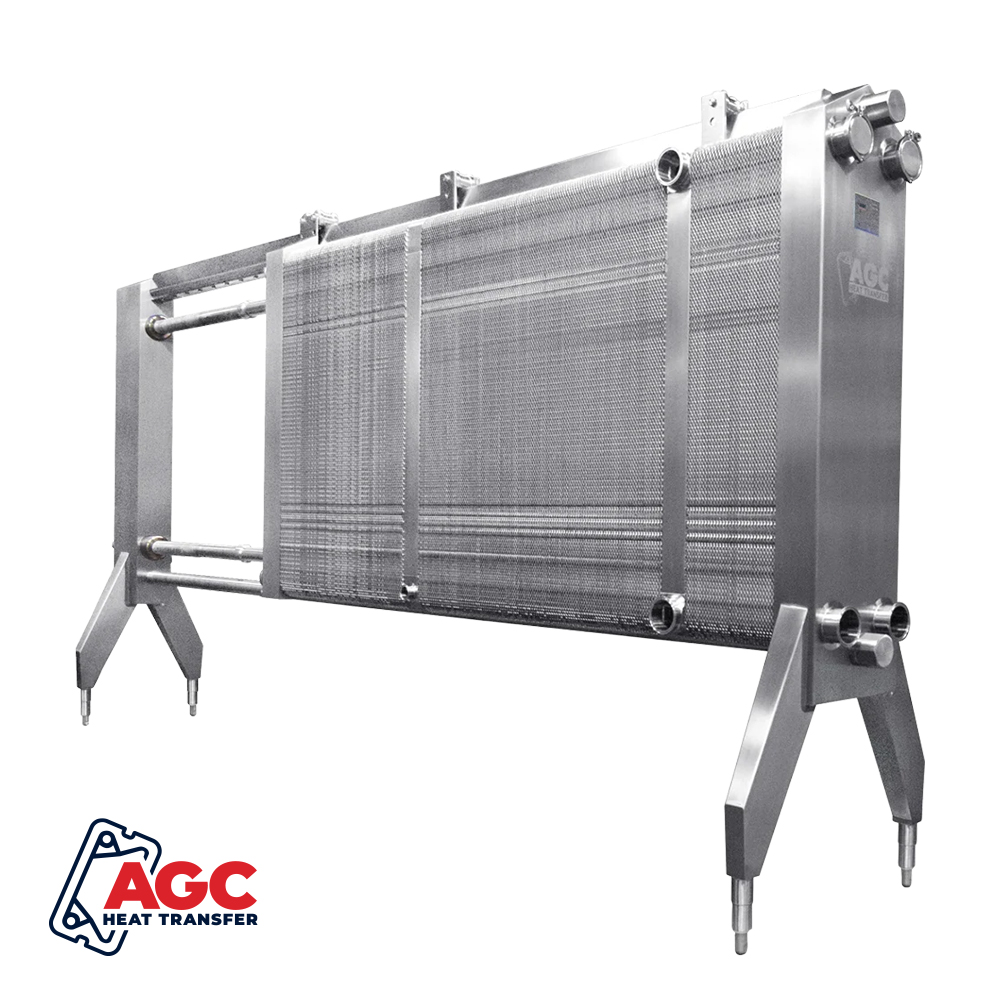
AGC’s manual twin spindle frames are a reliable and efficient solution for heat exchanger applications, offering easy maintenance and improved production uptime. Designed for operations that do not require automated open and close mechanisms, these frames provide even closure and reduced variability, extending the life of the unit and lowering total cost of ownership.

The Model AR51-M Frame is a high-pressure, sanitary solution designed for durability and efficiency, featuring a bead-blasted finish, quick-opening design, and compatibility with existing R51 frames. Built to 3-A specifications, it offers customizable options and an optional hydraulic closure for enhanced versatility.

The Model Pro31-M Frame is a high-pressure, sanitary frame designed for durability and reliability, featuring a bead-blasted finish, corrosion-resistant hydraulic end support, and compatibility with existing SR31 frames. It ensures long-lasting performance with heavy wall ports and quality construction.

The Model Pro21-M Frame from AGC Heat Transfer is expertly crafted to 3-A sanitary standards, designed to handle operating pressures up to 200 PSIG (13.6 Bar). Proudly made in the USA, it ensures reliable performance for hygienic applications.
AGC recommends having your plate heat exchanger professionally inspected at least once a year. Between full inspections, routine checks can help identify developing issues before they lead to leaks, reduced performance, or unexpected downtime. The ideal maintenance schedule may vary based on the application, operating conditions, cleaning procedures, and production demands.
Common signs that a plate heat exchanger should be inspected include leaks, changes in operating temperature, increased pressure drop, reduced heat transfer performance, product build-up, insufficient CIP, or visible damage to plates, gaskets, or the frame. During an inspection, plates should also be checked for corrosion, deformation, or other damage, while gaskets should remain flexible and free of cracks, tears, or deterioration.
Cleaning focuses on removing product residue, scale, and other deposits that can interfere with heat transfer. Maintenance goes further by inspecting the condition of the plates, gaskets, frame, and other components and replacing or repairing parts when needed.
A complete maintenance program may include cleaning, plate inspection, leak or crack detection, regasketing, and replacement of damaged components. AGC's regasketing process, for example, includes cleaning, crack detection, physical inspection, and installation of new gaskets.
For more extensive cleaning and inspection, plate packs may be sent to AGC for service in a controlled shop environment rather than being cleaned and disassembled on site.
Yes. Depending on the condition of the equipment, worn gaskets, damaged plates, and other components can often be replaced without replacing the complete heat exchanger. AGC offers replacement plates, gaskets, frame parts, and complete replacement plate packs for a wide range of heat exchanger systems.
The best option depends on the condition of the plates, gaskets, and frame as well as the system's current performance and process requirements. An inspection can help determine whether cleaning, regasketing, replacement plates, frame repairs, a retrofit, or a new heat exchanger is the most appropriate solution.